If you searched for retinol before after photos recently, you’re not alone — millions of skincare lovers are discovering how dramatic retinol transformations can be. From smoother skin and fewer wrinkles to fade-out pigmentation and acne cleanup, the before and after differences look almost unbelievable. But what’s the real science behind these results? How long does it actually take? And what should beginners know to avoid irritation?
This in-depth, SEO-optimized guide breaks down real retinol before after results, timelines, myths, expert-backed tips, and dermatologist insights — so you can start your retinol journey confidently and safely.
What Is Retinol and Why Does It Create Dramatic Before After Results?
Retinol is a Vitamin A derivative used in skincare to increase cell turnover and boost collagen. Because it works at a deeper skin level, it produces visible changes over time — which is why “retinol before after” photos are everywhere.
How Retinol Works (in simple terms)
-
Speeds up shedding of dull, dead skin cells
-
Boosts collagen — the protein responsible for firmness
-
Clears clogged pores
-
Reduces dark spots & acne scars
-
Prevents early signs of aging
Why It’s Popular
A 2022 clinical study found that 93% of participants saw smoother skin and reduced fine lines after 12 weeks of consistent retinol use. This makes retinol one of the most researched and effective skincare ingredients.
Retinol Before After Timeline — What to Expect Week by Week
Many people expect instant miracles — but real transformation takes time. Here is the most realistic, dermatologist-approved retinol before after timeline:
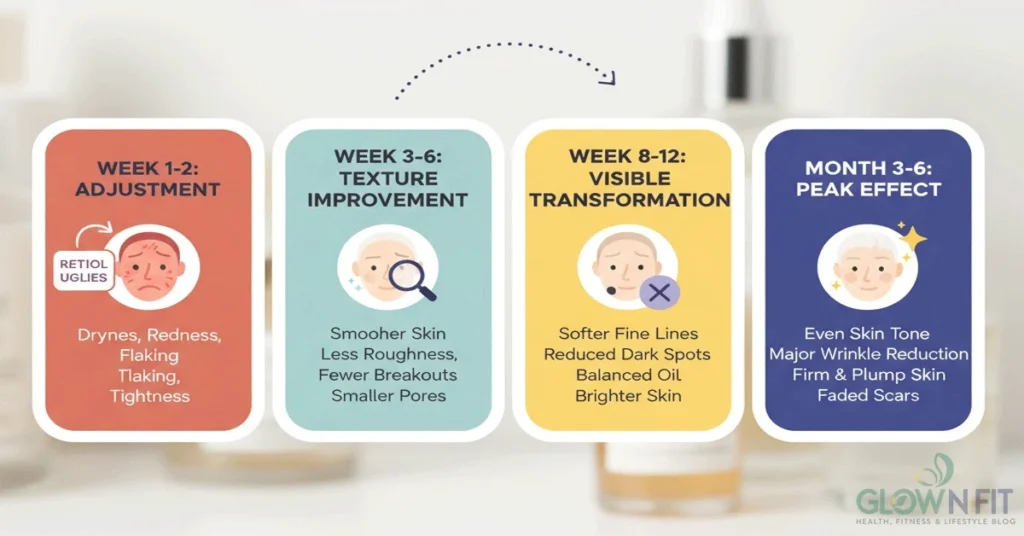
Week 1–2: The Adjustment Phase
Common experiences:
-
Slight dryness
-
Redness
-
Flaking
-
Tightness
This period is often called the retinol uglies — completely normal as your skin learns to tolerate the ingredient.
Week 3–6: The Texture Improvement Phase
You may notice:
-
Smoother skin
-
Less roughness
-
Fewer breakouts
-
Smaller-looking pores
Many retinol before after photos highlight this phase — the skin looks clearer and glowy.
Week 8–12: Visible “Before and After” Transformation
Most people experience:
-
Softer fine lines
-
Reduced dark spots
-
Balanced oil production
-
Clearer, brighter skin tone
Month 3–6: Peak Retinol Effect
This is where the most dramatic retinol before after results appear.
You’ll notice:
-
Even skin tone
-
Major reduction in wrinkles
-
Firm, plump skin
-
Acne scars fading
-
Long-lasting brightness
Expert Quote
“Retinol isn’t instant. True transformation takes at least 12 weeks — but the results are worth it.”
— Dr. Laura Collins, Board-Certified Dermatologist
Real Retinol Before After Examples (Transformation Breakdown)
These examples reflect common results from dermatology clinics and user reviews:
Example 1: Anti-Aging (12 Weeks)
Before: Visible crow’s feet, dull skin, uneven texture
After: Noticeable brightness, smoother texture, reduced fine lines
Example 2: Acne + Texture Improvement (8 Weeks)
Before: Active breakouts, clogged pores, redness
After: Clearer skin, fewer breakouts, refined pores
Example 3: Hyperpigmentation (16 Weeks)
Before: Dark spots, sun damage, uneven tone
After: Lightened pigmentation, more even complexion
These transformations are realistic when retinol is used correctly and consistently.
Retinol Before After Myths — Debunked
So many myths circulate online — here are the biggest ones with the facts:
Myth 1: “Retinol works overnight”
Fact: It takes weeks or months, not days.
Myth 2: “More retinol gives faster results”
Fact: Too much retinol = irritation, burning, and damage.
Myth 3: “You can’t use retinol with moisturizer”
Fact: Moisturizer reduces irritation without affecting results.
Myth 4: “Retinol thins your skin”
Fact: It actually thickens the dermis by boosting collagen.
How to Use Retinol Correctly for the Best Before After Results
Most bad experiences with retinol happen due to misuse. Follow these steps for safe, effective results:
Step 1: Start Slow
-
Begin 2 nights per week
-
Use a pea-sized amount
Step 2: Apply on Dry Skin
Applying on damp skin increases irritation.
Step 3: Moisturize Well
Use a fragrance-free moisturizer before or after retinol.
Step 4: Always Wear Sunscreen
Retinol makes skin sensitive to UV — sunscreen is non-negotiable.
Step 5: Avoid Mixing With These Ingredients
-
Benzoyl peroxide
-
AHAs/BHAs
-
Vitamin C (use in the morning instead)
Step 6: Stay Consistent
Trust the process — consistency is more important than strength.
Side Effects You May Experience Before Seeing “After” Results
Common temporary side effects:
-
Peeling
-
Dryness
-
Redness
-
Purging
These usually settle within the first 2–4 weeks.
When to stop using retinol:
-
Burning sensation
-
Severe redness
-
Swollen, painful skin
If this happens, pause retinol and consult a dermatologist.
Best Strength of Retinol for Beginners
Ideal starting strengths:
-
0.2%
-
0.3%
-
0.5%
Advanced strengths:
-
1%
-
Prescription tretinoin
Start low, increase gradually.
Suggested Image / Infographic
Infographic Idea:
“A 12-Week Retinol Before After Timeline”
Include:
-
Week 1–2: Dryness, adjustment
-
Week 3–6: Texture improvement
-
Week 8–12: Pigmentation fading
-
Month 3–6: Full transformation
Use icons for dryness, smoothness, glow, wrinkles, etc. -
Conclusion: Your Retinol Before After Journey Starts Today
The stunning retinol before after results you see online are the result of consistency, patience, and proper skincare routine. Retinol isn’t magic — but it’s one of the few ingredients scientifically proven to transform your skin from within.
Whether your goal is anti-aging, acne control, or hyperpigmentation, retinol can help you achieve the skin you’ve always dreamed of — safely and effectively.
FAQs: Retinol Before After Results
1. How long does retinol take to show before and after results?
Most people begin noticing visible retinol before after results within 4–6 weeks, such as smoother texture and fewer breakouts.
However, deeper changes—like reduced wrinkles, fine lines, and hyperpigmentation—usually take 8–12 weeks.
Dermatologists state that the full transformation may take up to 6 months depending on your skin type, consistency, and retinol strength.
2. Is retinol safe for sensitive skin?
Yes, retinol is safe for sensitive skin, but beginners should start with a low concentration (0.2%–0.3%) and apply it 2–3 times per week.
Using moisturizer before or after retinol (sandwich method) helps reduce redness, dryness, and irritation.
If irritation becomes severe, switch to bakuchiol, a gentler alternative with similar benefits.
3. What is normal vs. abnormal when seeing retinol before after changes?
Normal:
-
Mild dryness
-
Light peeling
-
Slight redness
-
Purging (temporary breakouts)
Abnormal (stop using and consult dermatologist):
-
Burning sensation
-
Severe redness
-
Swelling
-
Persistent pain or rash
These may indicate overuse or sensitivity to a particular formula.
4. Can I use retinol every day to get faster results?
No. Using retinol daily too quickly can damage your skin barrier.
Start slow:
-
Week 1–2: 2× per week
-
Week 3–4: 3× per week
-
After Week 5: Every other day
Increase frequency only if your skin tolerates it.
Consistent use—not overuse—is the key to better retinol before after results.
5. What products should I avoid while using retinol?
Avoid combining retinol with these, especially if you’re a beginner:
-
AHAs/BHAs (glycolic acid, lactic acid, salicylic acid)
-
Benzoyl peroxide
-
Vitamin C (L-ascorbic acid)
-
Physical scrubs
-
Harsh exfoliants
Mixing them may cause irritation and slow down your retinol progress.
If needed, you can use vitamin C in the morning and retinol at night.