Diet Pepsi is one of the most popular sugar-free cola options worldwide — but have you ever stopped to check what’s actually inside this zero-calorie soda? With rising concerns about artificial sweeteners, preservatives, and long-term diet soda health effects, more people want clarity about what they’re consuming daily.
In this detailed, SEO-optimized guide, we uncover every major Diet Pepsi ingredient, why each one is used, and how it may impact your health. You’ll learn about the sweetener blend, acidity levels, caffeine content, and nutritional facts — along with practical tips so you can decide if this low-calorie beverage fits your lifestyle or not.
Let’s dive deep into the label.
What Are the Main Ingredients in Diet Pepsi?
Diet Pepsi is a carbonated soft drink designed to taste like regular cola without the sugar. The exact formula can vary by region, but the core ingredients remain similar across markets.
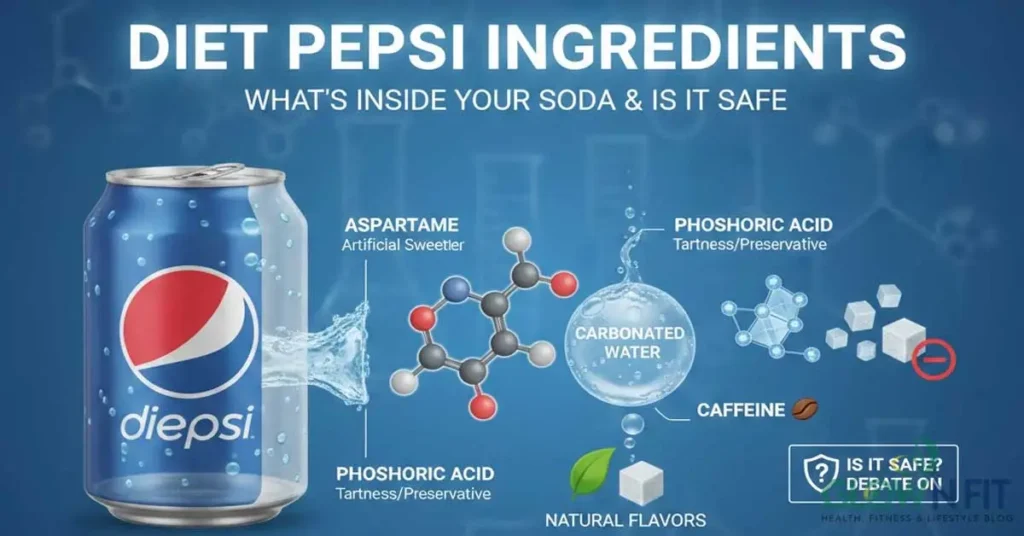
Full Ingredient List
-
Carbonated Water
-
Caramel Color
-
Aspartame (sweetener)
-
Acesulfame Potassium (Ace-K) (sweetener)
-
Phosphoric Acid
-
Citric Acid
-
Caffeine
-
Potassium Benzoate (preservative)
-
Natural Flavors
These ingredients work together to create the familiar cola profile with zero sugar and minimal calories.
Ingredient-by-Ingredient Breakdown
1. Carbonated Water
This is simply water infused with carbon dioxide under pressure. It gives Diet Pepsi its fizz and refreshing texture found in most low-calorie carbonated beverages.
Why it’s added:
-
Enhances mouthfeel
-
Preserves flavor
-
Improves drink shelf-life
2. Caramel Color
The dark brown appearance comes from caramel coloring, made by heating carbohydrates.
3. Artificial Sweeteners (Aspartame + Ace-K)
Since Diet Pepsi contains no sugar, it relies on high-intensity sweeteners:
Aspartame
-
Around 200 times sweeter than table sugar
-
Minimal calories
-
Used widely in diet soft drinks and sugar-free foods
Acesulfame Potassium (Ace-K)
-
Often paired with aspartame to enhance sweetness
-
Heat-stable and long-lasting
Why Coca-Cola and Pepsi use blended sweeteners:
Blends improve taste and mimic the flavor curve of real sugar.
4. Acids: Phosphoric Acid & Citric Acid
Both acids give Diet Pepsi its sharp “cola bite.”
-
Phosphoric Acid: Common in cola drinks; provides tanginess
-
Citric Acid: Enhances freshness and balances sweetness
Potential concerns:
Acidic drinks may erode enamel if consumed frequently.
5. Potassium Benzoate (Preservative)
Prevents bacterial growth and keeps soft drink freshness stable during long storage.
6. Natural Flavors
A proprietary blend used to create the signature Pepsi taste.
7. Caffeine
A 12-oz can contains around 35 mg caffeine, making it a mild stimulant.
Diet Pepsi Nutrition Facts (Zero Sugar, Zero Calories)
A standard 12 fl oz (355ml) can contains:
-
0 calories
-
0g sugar
-
0g carbohydrates
-
35mg caffeine
This makes Diet Pepsi a popular choice among people managing weight loss, diabetes, or those preferring a sugar-free cola alternative.
Diet Pepsi Formula Changes: Aspartame, Sucralose & Consumer Reactions
The Aspartame-Free Experiment (2015)
PepsiCo briefly removed aspartame and replaced it with sucralose (Splenda) + Ace-K to address public concerns over aspartame safety.
Why They Brought Aspartame Back
Customers complained about flavor differences, so Pepsi reintroduced aspartame, branding it as “Classic Sweetener Blend.”
Important Note:
Fountain sodas may still use sucralose, so taste can differ based on where you buy it.
Are Diet Pepsi Ingredients Safe? What Science Suggests
✔ Potential Benefits
-
Zero sugar: Helps reduce daily calorie intake
-
Low glycemic impact: Helpful for blood sugar control
-
No carbohydrates: Useful for low-carb or keto lifestyles
-
Caffeine boost: Mild energy lift
❗ Concerns & Possible Side Effects
1. Artificial Sweeteners Debate
Although FDA and EFSA classify aspartame as safe within limits, research on long-term effects remains mixed.
Possible concerns:
-
May impact gut microbiome
-
Could stimulate sugar cravings
-
Some people experience headaches or sensitivity
2. Acidity
Phosphoric and citric acid may contribute to:
-
Tooth enamel erosion
-
Possible bone mineral issues with heavy consumption
3. Preservatives
Potassium benzoate is considered safe but may not suit those seeking clean-label foods.
4. Overconsumption
Zero calories don’t mean zero impact. Excess can affect:
-
Hydration
-
Appetite
-
Caffeine tolerance
How to Read the Diet Pepsi Label (Simple Guide)
-
Check serving size – usually 12 oz
-
Spot sweeteners – look for aspartame, Ace-K, sucralose
-
Note acidity – phosphoric & citric acid
-
Identify preservatives – potassium benzoate
-
Evaluate caffeine – good to know for daily intake
-
Compare with other diet sodas – ingredients vary across brands
-
Assess your health needs – diabetes, migraines, or PKU sensitivities
FAQs (People Also Ask)
1. Is Diet Pepsi bad for you?
In moderation, it’s generally safe. Problems arise with excess intake, especially due to acidity and artificial sweeteners.
2. Does Diet Pepsi have sugar?
No. It’s a 100% sugar-free cola.
3. What sweeteners does Diet Pepsi use?
Mostly aspartame + Ace-K. Some versions use sucralose.
4. Does Diet Pepsi contain caffeine?
Yes — about 35 mg per can.
5. Is Diet Pepsi good for weight loss?
It can help reduce calorie intake but may increase cravings in some individuals due to sweetness signaling.
6. Is Diet Pepsi keto-friendly?
Yes — it has 0 carbs.
Tips If You Drink Diet Pepsi Regularly
-
Drink moderately (1 can a day or less)
-
Use a straw to reduce enamel contact
-
Rinse mouth with water afterwards
-
Stay hydrated with plain water
-
Limit intake if caffeine-sensitive
-
Rotate with healthier drinks (sparkling water, herbal teas)
Diet Pepsi remains a top zero-calorie beverage thanks to its balanced blend of artificial sweeteners, flavor enhancers, and carbonation. It satisfies cola cravings without the sugar spike — but like any diet soft drink, it’s best consumed in moderation.
If you enjoy Diet Pepsi, enjoy it thoughtfully. Read labels, understand the ingredients, and choose beverages that support your long-term health goals.