If you own (or are thinking about getting) a Russian tortoise, one of the first questions is: What should I feed it? Getting the Russian tortoise diet wrong can cause shell deformities, metabolic bone disease, digestive upset, and a shorter, less happy life. This guide promises a practical, field-tested plan to feed your tortoise correctly—what to make a steady staple, what to avoid, how often to feed, supplements and a sample weekly menu. Read on for vet-backed advice, real stats, and actionable tips you can use today.
Why the Russian Tortoise Diet Matters
Russian tortoises are herbivorous grazers adapted to dry, temperate environments. In captivity they thrive on a high-fiber, low-protein, low-sugar diet that mimics wild weeds, grasses, and flowers. Proper feeding supports healthy shell growth, balanced digestion, and long life. For reliable clinical and care guidelines, veterinarians recommend leafy weeds, grasses, UVB access, and calcium supplementation.
What to Feed: Core Foods (Staples)
Make these the backbone of the Russian tortoise diet:
-
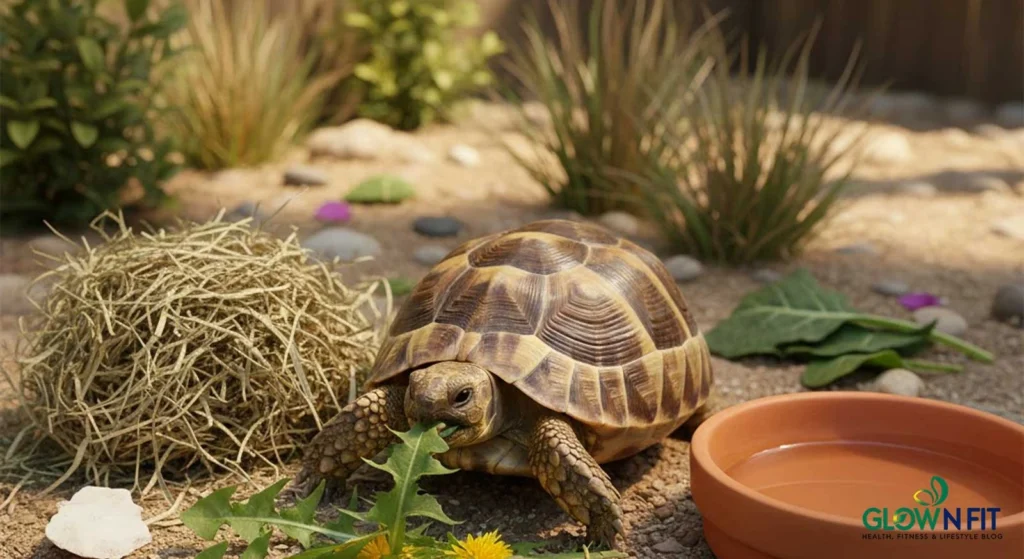
Dandelion greens and flowers — top staple: calcium, fiber, vitamins.
-
Collard, mustard, turnip greens — nutrient-dense and filling.
-
Plantain (broadleaf weed), clover, chickweed — wild weeds are ideal when pesticide-free.
-
Escarole, endive, romaine (sparingly) — useful for variety and hydration.
Why weeds and grasses? Wild tortoises spend most of their feeding time grazing on diverse plants. Replicating this with mixed greens improves gut flora and reduces selective eating. Studies/surveys of tortoise keepers report that many owners aim for diets with >80% grasses and weeds during active months.
Grasses & Hay (Fiber sources)
-
Timothy hay, meadow hay, and fresh grass help digestive transit and provide bulk.
-
If you maintain an outdoor pen, encourage clover and mixed grasses for grazing.
Safe Vegetables & Flowers (Supplemental)
-
Squash, zucchini, bell pepper (in moderation).
-
Edible flowers like hibiscus or rose petals — great for variety.
-
Opuntia (spineless cactus pads) where available, for hydration and fiber.
Treats: Use Sparingly
-
Fruits (berries, apple slices) only occasionally — very small amounts due to sugar content.
-
Avoid making fruit a regular part of the diet.
Foods to Avoid (and Why)
High-Risk Foods
-
Animal protein, dairy, insects — not suitable for these herbivores; can cause kidney and liver stress.
-
Spinach, beet greens, Swiss chard (high oxalates) — bind calcium and block absorption.
-
Iceberg lettuce — essentially water, lacks nutrition; not a staple.
-
Processed human food (bread, pasta, chips) — harmful and nutritionally empty.
-
Pesticide-treated plants — can be toxic; always use organic or wild-foraged from safe areas.
Supplements & Environmental Needs (Critical)
Calcium, Vitamin D, and UVB
-
Calcium supplementation (dust food 1–3× per week depending on UVB exposure) is a standard recommendation. Use a calcium powder without phosphorus.
-
UVB lighting or safe daily sunlight is essential for vitamin D3 synthesis and calcium metabolism. Without UVB, even a calcium-rich diet can fail to prevent metabolic bone problems.
Water & Soaking
-
Provide a shallow water dish daily; many Russian tortoises soak for hydration and to soften food. Change water daily.
How Much & How Often to Feed
Age-Based Feeding Guidelines
-
Hatchlings & Juveniles (0–5 years): feed daily. Offer chopped mixed salad and allow 30–60 minutes of grazing. Juveniles need more frequent meals to support growth.
-
Adults (5+ years): feed every 1–2 days or provide grazing 3–5 times per week. Adults often self-regulate and may not require daily feeding.
Practical Tip: Serve what the tortoise will clean up in 1–2 hours. Remove uneaten food to avoid mold and attractants.
Step-by-Step: How to Build a Weekly Diet Plan
Step-by-Step Feeding Plan (Example)
-
Assess availability: Identify pesticide-free weeds/greens you can source weekly.
-
Mix base salad: 70–80% leafy weeds + 10–20% grasses/hay + 0–10% safe veg/flowers.
-
Supplement schedule: Dust with calcium powder 1–3× weekly; multivitamin once every 1–2 weeks (vet advice).
-
Rotate menu: Change greens daily to avoid selective feeding.
-
Observe & adjust: Monitor weight, shell texture (smooth, firm), activity and feces; consult a reptile vet if you see soft shell, lethargy, or abnormal stool.
Sample Week (brief):
-
Mon: Dandelion + clover + hay
-
Tue: Collard + zucchini + hibiscus petals
-
Wed: Turnip greens + plantain + small squash slice
-
Thu: Grazing on mixed grasses + clover
-
Fri: Mustard greens + romaine (hydration)
-
Sat: Mixed weeds + tiny berry treat (rare)
-
Sun: Salad mix + cuttlebone available
Real Example & Statistic (Builds Trust)
A recent multi-country survey of Palearctic tortoise keepers found 67.7% fed tortoises an optimum summer diet of >80% grasses and weeds, correlating with fewer diagnosed diseases in those collections. This supports prioritizing grass/weed-based feeding for Russian tortoises in active seasons.
Common Problems & Quick Fixes
Soft Shell / Metabolic Signs
-
Cause: Low calcium/insufficient UVB.
-
Fix: Immediate vet check; start calcium supplementation and correct UVB exposure.
Overweight or Diarrhea
-
Cause: Too many fruits, high-water veggies, or poor hygiene.
-
Fix: Reduce sugary items, increase fibrous greens and hay, ensure clean water and substrate.
Picky Eaters / Selective Feeding
-
Offer mixed salads; chop finely for juveniles; hide favored foods among less preferred greens to encourage balanced eating.
FAQs (People Also Ask)
How often should I feed my Russian tortoise?
Juveniles daily; adults every 1–2 days or several grazing days per week. Adjust based on activity and body condition.
Can Russian tortoises eat fruit?
Yes, but very rarely. Fruits are high in sugar and should be treats, not staples.
Do I need to give calcium supplements?
Yes—especially if UVB or natural sunlight is limited. Dust food 1–3× weekly and provide cuttlebone if desired.
The Russian tortoise diet is simple in principle—prioritize weeds, leafy greens, grasses and match those with proper calcium and UVB to support shell and bone health. Rotate foods, watch growth and stool, and consult a reptile vet when in doubt. Start by planning a weekly salad based on the sample plan above and add calcium dusting to your routine. That small change can dramatically improve your tortoise’s vitality.